

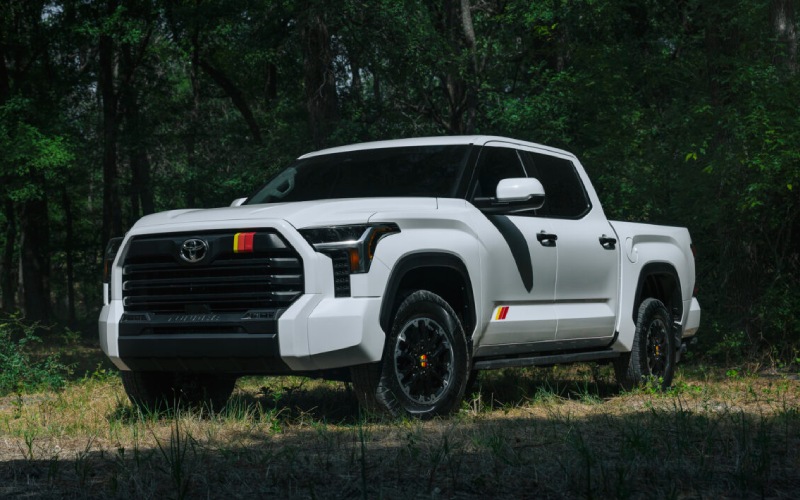
Toyota of Portland - 2026 Toyota Tundra Towing Capability for Boats and Travel Trailers near Beaverton, OR
Choosing the right truck for towing is about more than a single number. It’s about how the powertrain delivers torque when you need it, how the chassis behaves under load, and how the technology helps you back into a tight campsite or boat launch without stress. The 2026 Tundra brings a complete package to the table: twin-turbo power, a multi-link rear suspension, and available trailering aids designed to make you feel capable from the first hookup.
Let’s break down what matters if you tow around the west side and up to popular ramps and campgrounds near Beaverton, OR. Hills, short on-ramps, and tight parking can all test a towing setup. Tundra’s available i-FORCE MAX Hybrid Powertrain, with 437 HP and 583 Lb.-Ft. of Torque, shines when you’re starting on an incline or merging with confidence. Its strong low-end torque helps get heavier loads moving cleanly, while the 10-speed automatic transmission keeps you in the right gear without drama. If you prefer a non-hybrid option, the i-FORCE Gas Powertrain still delivers robust 389 HP and 479 Lb.-Ft. of Torque for decisive response when accelerating and passing.
Max Towing is rated at 12,000 Lbs. when properly configured, which opens the door for a wide range of travel trailers, utility rigs, and boats. But the headline number is only the start. Tundra’s multi-link rear suspension with coil springs contributes to both ride comfort and towing stability, working to keep the truck more composed across uneven surfaces and when weight shifts at speed. Selectable TOW/HAUL modes adjust shift logic to help maintain momentum on grades, while available tow mirrors and camera views support better awareness along the entire rig.
Backing down a ramp or into a campsite is where Tundra’s available Trailer Backup Guide With Straight Path Assist and Panoramic View Monitor (PVM) earn their keep. Trailer Backup Guide With Straight Path Assist uses sensors and cameras to help keep your trailer aligned as you reverse, reducing the guesswork that often intimidates first-time tow drivers. PVM compiles views from cameras mounted around the truck to present a 360-degree perspective on the available display, letting you check clearances and obstacles as you ease into place. Together, these systems are a practical confidence boost at crowded launches or trailheads.
For added control on rolling terrain, look for grades that include an Integrated Trailer Brake Controller (ITBC). With ITBC, you can fine-tune trailer brake gain from the cabin to match trailer weight and conditions. It’s one of those thoughtful tools that make a noticeable difference, especially when descending from the West Hills or pulling a camper out of a gravel lot after a long weekend.
Cabin technology supports towing, too. The available 12.3-In. Digital Gauge Cluster can bring towing functions into easy view, while the available 14-In. Multimedia Touchscreen improves camera visibility and access to navigation, audio, and connected features. On longer trips to the coast or up to the mountains, these systems help you stay organized and focused, with essential data right where you expect it.
If off-pavement adventures are part of your towing life, the TRD Family has options. The TRD Off-Road Package adds capability-focused upgrades for light-to-moderate trails, while TRD Pro brings robust hardware like TRD Pro off-road suspension with FOX® shocks, 18-in. BBS® forged-aluminum wheels wrapped in Falken® WILDPEAK All-Terrain tires, and a heritage-inspired “TOYOTA” grille with LED light bar and marker lights. These enhancements help when you’re navigating to more remote campsites or maneuvering a small trailer down washboard roads.
Before you choose your configuration, take a moment to list your heaviest trailer, typical cargo, and the longest routes you plan to tow. Then, test the truck on a route that includes a highway merge, a mild hill, and a tight parking space. You’ll feel how the powertrain responds, how the suspension manages weight, and how the trailering tech supports you during trickier maneuvers. The goal is simple: match your Tundra to your real-world towing routine so every trip feels easy from the start.
- Know your weights: Confirm trailer GVWR, tongue weight, and cargo to ensure you’re within Tundra’s limits.
- Choose your power: Pick i-FORCE MAX for maximum torque and hybrid assist, or i-FORCE Gas for strong, straightforward performance.
- Prioritize trailering tech: Trailer Backup Guide With Straight Path Assist, PVM, and ITBC help in tight spaces and on varied terrain.
- Plan the route: Include grades, short on-ramps, and narrow lots in your test drive to mirror real towing.
- Consider TRD: If you tow off pavement, TRD Off-Road or TRD Pro add clearance, damping, and traction benefits.
These steps give you a practical framework to evaluate how the truck behaves when towing in your area. By simulating your routine, you can pick the configuration that makes hitching, hauling, and parking feel straightforward from day one.
Frequently Asked Questions:
How do I decide between the i-FORCE Gas and i-FORCE MAX Hybrid Powertrains for towing?
If you regularly tow near the upper end of your trailer’s weight or want the smoothest, most confident launches on grades, the i-FORCE MAX Hybrid Powertrain’s added torque is a clear advantage. If your trailer is moderate and you value strong, straightforward performance, the i-FORCE Gas Powertrain is an excellent fit.
Which Tundra bed length works best if I carry towing accessories and camping gear?
For families and gear-heavy trips, the 6.5-ft. bed often strikes the best balance of cargo space and overall length. If you haul longer items, the 8.1-ft. bed maximizes utility. The 5.5-ft. bed is great for maneuverability and daily driving while still accommodating coolers, toolboxes, and recovery gear.
What tech helps most when I’m new to reversing with a trailer?
Trailer Backup Guide With Straight Path Assist is the single best helper for new tow drivers. It assists in keeping your trailer aligned as you reverse, making it easier to avoid overcorrecting. Pair it with PVM for a wider view around the truck.
Do TRD upgrades matter if I tow on gravel or uneven access roads?
Yes. TRD Off-Road or TRD Pro tuning and component upgrades can improve control, damping, and traction on rough approaches to campsites or launch areas. The added capability helps you maintain composure with a loaded truck and trailer over uneven surfaces.
Wherever your next trip takes you, the Tundra’s balanced chassis, potent powertrains, and focused trailering tech make towing feel approachable and predictable. For guidance on choosing the right configuration and a test drive that mirrors your towing routine, Toyota of Portland is here to help, serving Happy Valley, Beaverton, and Vancouver.
Request more 2026 Toyota Tundra information
Categories:
Toyota Tundra
