

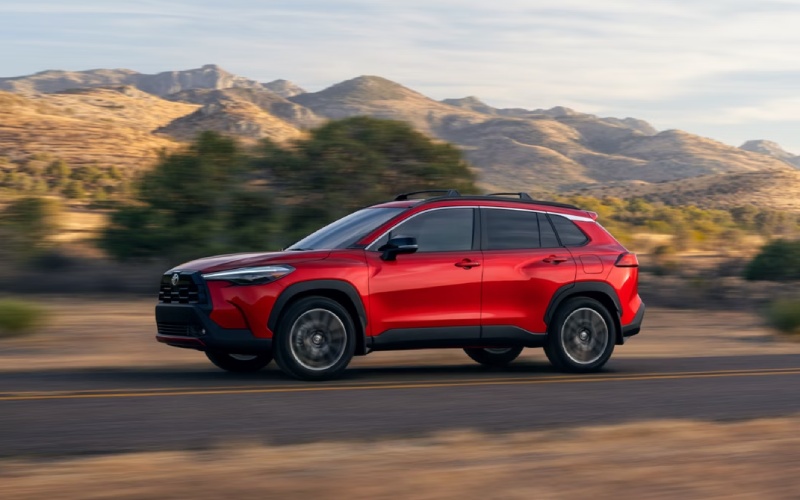
Toyota of Portland - Which hybrid suits Beaverton, OR commutes better — the 2026 Toyota Corolla Cross or the 2026 Subaru Crosstrek?
When drivers start comparing hybrid small SUVs for everyday commuting and weekend versatility, one question comes up again and again: which hybrid setup feels better in real-world traffic and weather? If your routes weave through neighborhood streets, 26 to 30 minutes of highway, and the occasional uphill on-ramp, the 2026 Toyota Corolla Cross Hybrid and the 2026 Subaru Crosstrek Hybrid land at the top of the shortlist. Both bring all-wheel traction, elevated visibility, and an efficient powertrain. But they do not deliver the same driving experience. Below, we break down how each hybrid approaches performance, traction, cabin tech, and long-term peace of mind so you can choose with confidence around Beaverton, OR.
Let’s start with the way each SUV moves in traffic. The Corolla Cross Hybrid pairs a 2.0-liter engine with electric motors for smooth, confident launches and easy merging. The e-motor assist helps it feel responsive without revving the engine unnecessarily, and the transition from electric assist to gasoline power is impressively seamless. Subaru’s Crosstrek Hybrid also blends a gasoline engine with electric motors, but its power delivery tends to emphasize steady, linear response. Both will climb Sylvan Hill or head toward the West Hills without drama, yet the Toyota’s hybrid tuning stands out for its quiet composure and smoothness at lower speeds where most commutes live.
Traction, control, and confidence
All-wheel traction is a must-have for many shoppers in the Pacific Northwest. The Corolla Cross Hybrid uses Electronic On-Demand All-Wheel Drive, an electric motor that can power the rear axle when front tires slip or when extra traction helps cornering stability. Because it is electric, response is nearly instantaneous. Crosstrek Hybrid uses Subaru’s hallmark Symmetrical All-Wheel Drive, famous for stability and predictable handling. On wet mornings, painted crosswalks, and leafy neighborhood turns, both systems inspire confidence. Where the Toyota system earns bonus points is its seamless handoff between power sources and the way it adds rear-axle assist only when needed, preserving a smooth, calm ride the rest of the time.
Steering feel matters on Highway 217 and Canyon Road. The Corolla Cross Hybrid’s tuning prioritizes a relaxed, centered feel at speed, with light effort for tight parking lots. Crosstrek Hybrid is similarly sure-footed on the highway. For drivers sensitive to cabin noise and vibration in stop-and-go traffic, the Toyota’s hybrid calibration feels especially refined, reducing the kind of drivetrain busy-ness that can make a commute feel longer than it is.
Cabin tech and everyday comfort
Modern commuters expect a cabin that organizes the day without distractions. The Corolla Cross offers available 10.5-in Toyota Audio Multimedia with wireless Apple CarPlay® and Android Auto™, plus an available 12.3-in digital gauge cluster for easy-glance information. Four available USB-C ports and available Qi-compatible wireless charging keep devices topped up. Crosstrek Hybrid counters with Subaru’s available 11.6-inch Multimedia system and an available premium audio system. Ergonomically, both cabins land the climate and audio controls within easy reach. The Toyota builds on that with an available power liftgate that makes loading a backpack or gym bag simple when your hands are full after work. It is a small touch that commuters end up loving.
Seat comfort is another differentiator. The Toyota makes heated front seats available, along with SofTex®-trimmed seating on higher grades for durability that still looks and feels upscale. Rear-seat vents are standard in Corolla Cross, a thoughtful detail rear passengers will appreciate in cooler months or during a family shuttle to practice. If you typically have two adults up front and occasionally carry passengers in the rear, that rear-vent detail is one of those quality-of-life features that pays off daily.
Practical space and weekend adaptability
Space is the other side of the commuter coin. You need room for the everyday carry plus a bit of flex for weekend plans. The Corolla Cross can open up to 52 cu. ft. of cargo room with the rear seats folded, creating a long, flat space for bulky items. The split-folding second row also makes it easy to carry a friend and a long box from the hardware store in one trip. Crosstrek Hybrid is plenty practical as well, and the roof rails on both SUVs make it easy to strap a cargo box or a bike rack for Saturday mornings. If you prefer an SUV that feels urban-size outside yet surprisingly roomy inside, the Toyota nails that balance.
Safety and driver-assist confidence
Both SUVs take safety seriously. Every Corolla Cross includes Toyota Safety Sense™ 3.0 with key features like the Pre-Collision System with Pedestrian Detection (PCS w/PD), Full-Speed Range Dynamic Radar Cruise Control (DRCC), Lane Departure Alert with Steering Assist (LDA w/SA), Lane Tracing Assist (LTA), Automatic High Beams (AHB), Road Sign Assist (RSA), and Proactive Driving Assist (PDA). Available Blind Spot Monitor (BSM) with Rear Cross-Traffic Alert (RCTA) and Front and Rear Parking Assist with Automatic Braking add more peace of mind. Crosstrek Hybrid offers standard EyeSight® Driver Assist Technology and available DriverFocus Distraction Mitigation System for added awareness. On crowded lots near Cedar Hills or during evening commutes, both lineups watch your back. The Toyota’s across-the-board TSS 3.0 standardization keeps the decision simple.
Reliability and long-term ownership set expectations from the first test drive. Toyota’s reputation for hybrid longevity is widely known, and the Corolla Cross Hybrid benefits from Toyota’s deep experience with electrified powertrains. Subaru stands tall on durability too, with long-lasting drivetrains and an ownership community that values go-anywhere capability. The difference is one of emphasis: the Toyota feels engineered to minimize day-to-day friction with highly unified tech and powertrain refinement, while the Subaru highlights its AWD-first, adventure-ready character.
Test-drive plan for Beaverton, OR shoppers
Use a structured loop that mirrors your week, then a quick “what-if” scenario for weekends. Try a route with a few stoplights, a highway on-ramp, and a tight parking lot. Note acceleration smoothness, cabin noise, and how the infotainment responds to your phone.
- Morning mimic: Start with a few stop signs to feel low-speed smoothness and brake pedal consistency.
- Highway merge: Use a short on-ramp to gauge acceleration confidence and steering stability at speed.
- Parking practice: Make a tight U-turn and back into a spot to evaluate turning radius and camera clarity.
By the end of that loop, most Beaverton shoppers report the Corolla Cross Hybrid “disappears into the background” in the best way, simply doing what you ask without fuss.
Frequently Asked Questions:
Does the Corolla Cross Hybrid have all-wheel drive?
Yes, Electronic On-Demand All-Wheel Drive is available on Corolla Cross Hybrid, adding instant rear-axle assist when traction is needed.
Can both SUVs handle rainy, slick commutes?
Absolutely. Corolla Cross Hybrid’s on-demand electric AWD and Crosstrek Hybrid’s Symmetrical AWD both deliver confident grip on wet pavement and painted crosswalks.
Which infotainment setup is more intuitive for daily use?
Preferences vary, but many commuters appreciate Toyota’s available 10.5-in Toyota Audio Multimedia with wireless Apple CarPlay® and Android Auto™ and the available 12.3-in digital gauge cluster for at-a-glance info.
How do these hybrids feel in stop-and-go traffic?
Both are capable, but the Corolla Cross Hybrid stands out for its smooth, quiet transitions between electric assist and gasoline power, which can reduce fatigue on longer commutes.
If you are refining your shortlist, schedule a back-to-back drive and bring your everyday gear with you. Toyota of Portland, serving Happy Valley, Beaverton, and Vancouver, can help you compare features side by side so your decision is straightforward. One last thought: if your priority is a calm, connected commute with traction at the ready, the Corolla Cross Hybrid sets a high bar.
When you are ready to try it for yourself, our product specialists can set up a route that mirrors your weekday routine and a quick weekend scenario, so you feel how naturally the Toyota fits your life. Choosing confidently is easier when an SUV feels right from the first mile.
For local shoppers cross-shopping hybrids, that easygoing, refined character is exactly why the Corolla Cross Hybrid so often edges out the Crosstrek Hybrid once the test drives are done.
You will find the support you need from a team that understands hybrids inside and out. And with one visit, you will have the insights to decide which compact hybrid SUV is truly right for you.
We are here to help every step of the way with answers, guidance, and a test-drive plan that respects your time.
See what a quieter, more composed hybrid commute can feel like—and why so many Beaverton drivers end up choosing Corolla Cross Hybrid.
Start your comparison with a quick call or message, then try that real-world test loop to understand the difference where it matters most: your daily drive.
When commuting feels calmer, everything else in the day tends to go better too.
We look forward to welcoming you at Toyota of Portland for your hybrid test drive and side-by-side comparison.
Request more 2026 Toyota Corolla Cross information
Categories:
Toyota Corolla Cross
