

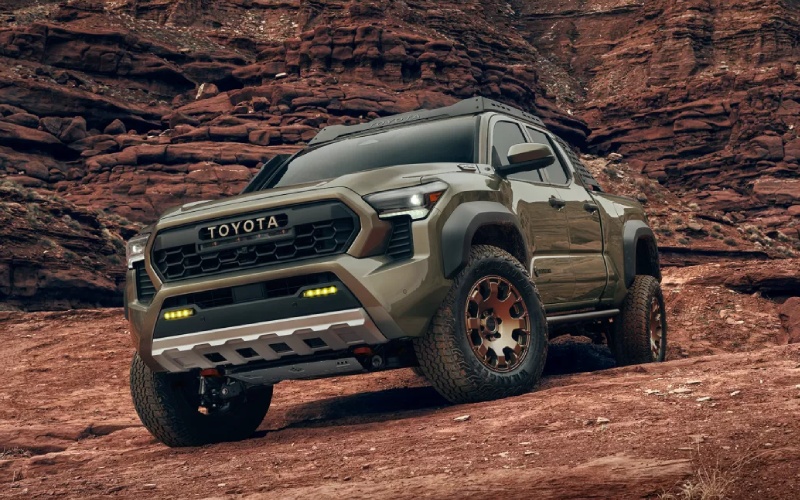
Toyota of Portland - 2026 Toyota Tacoma vs 2026 Chevrolet Colorado: Which midsize truck is better for off-road trails around Vancouver, WA?
When the weekend plan is a run out to Yacolt Burn ORV or a sunrise fishing trip along the Columbia, the midsize pickup choice often narrows to two heavy hitters: Toyota Tacoma and Chevrolet Colorado. Both promise strong torque, trail-ready gear, and modern tech, but the question many shoppers ask is simple: Which one is better for off-road weekends around Vancouver, WA? Let’s take a clear, feature-by-feature look focused on the gear and systems owners actually use when the pavement turns to rock and ruts.
Powertrains that shape the trail experience
Tacoma’s latest powertrain lineup offers a distinct advantage for low-speed control and midrange punch. The available i-FORCE MAX hybrid pairs a turbocharged 2.4L engine with an electric motor for up to 326 horsepower and 465 lb.-ft. of torque, delivered with the kind of immediacy that helps on steep, loose climbs. An 8-speed automatic is standard, while select Tacoma grades offer a 6-speed manual for drivers who want clutch control over ledges and tight switchbacks. Colorado, by contrast, focuses on a single-mission approach with its standard 2.7L TurboMax® engine producing 310 horsepower and 430 lb.-ft. through an 8-speed automatic. It’s robust and responsive, but the lack of a hybrid or manual option means fewer ways to tailor the truck to specific off-road preferences.
On real-world trails, hybrid torque delivery shows its value. The i-FORCE MAX system fills in off-idle response with electric assistance, which can smooth throttle tip-in over rocks or roots that might otherwise induce wheelspin. It’s the kind of difference that’s subtle on paper and clear as day on the trail.
Chassis and suspension: Articulation and composure
Underneath, Tacoma’s available multi-link rear suspension pays dividends on washboard access roads and during slow-speed articulation. There’s less lateral hop, more consistent contact patches, and better directional stability when hopping from pavement to gravel and back again. TRD Pro’s 2.5-in. FOX® Internal Bypass QS3® shocks and Trailhunter’s Old Man Emu® 2.5-in. forged monotube position-sensitive shocks are tuned by specialists who live and breathe off-road control, and it shows in both ride and response. Colorado ZR2 counters with Multimatic® DSSV dampers and a factory 3-in. lift, a serious setup that excels at faster desert running and bigger hits. For the narrow, technical forest paths that define much of Southwest Washington and the Gorge, Tacoma’s articulation-friendly tuning and available Stabilizer Disconnect Mechanism (SDM) provide confidence at crawl pace.
Trail tech that actually helps
Modern off-roading is as much about sensors and views as it is about approach angles. Tacoma’s available 3D Multi-Terrain Monitor stitches together forward, side, and underbody camera views, helping spot stumps and buried rocks before they find a skid plate. Crawl Control (CRAWL) acts like an off-road cruise control, holding a consistent low speed while modulating throttle and brakes so the driver can focus on steering. Add in an available front stabilizer bar disconnect and selectable terrain modes, and Tacoma provides a broad toolkit. Colorado’s technology bench is strong as well, with available underbody cameras, multiple drive modes including Baja on ZR2, and a clear 11.3-in. center display paired to an 11-in. Driver Information Center. The overlap is substantial, but Tacoma’s camera rendering and crawl-speed aids feel purpose-built for slow, technical sections common on PNW trails.
Towing and trailering confidence for weekends that mix it up
Plenty of Vancouver-area weekends start with towing—be it a small trailer with dirt bikes out to Jones Creek ORV or a lightweight fishing boat to a ramp off SR-14. Tacoma leans into that reality with available Trailer Backup Guide featuring Straight Path Assist and a Blind Spot Monitor that expands detection when a trailer is recognized. Those features reduce the guesswork when backing down a narrow ramp or threading a tight campground. Colorado offers a trailering app and helpful camera views, but it does not match the Tacoma’s trailer-aware guidance tools. The result is a simpler, calmer hitch-to-launch routine.
Daily versatility when the trail dust settles
On Monday, the same truck that scrambled over basalt in the Gorge becomes a commuter. Tacoma’s available 14-in. Toyota Audio Multimedia touchscreen and available 12.3-in. digital gauge cluster serve up crisp visuals and intuitive menus. Toyota Safety Sense™ 3.0 enhances peace of mind with features like Lane Tracing Assist and Proactive Driving Assist, while the cabin offers smart storage and the option for heated and ventilated seats. Colorado’s 11.3-in. screen with Google built in, Apple CarPlay® and Android Auto compatibility, and available wireless charging deliver the essentials with polish. Both manage the day-to-day well, though Tacoma’s larger displays and richer driver-assist feature set feel a step more comprehensive.
One more practical differentiator is power at camp or the worksite. On Tacoma i-FORCE MAX grades, an available 2400W power supply in the bed can run gear without a generator. Colorado offers an available 120-volt bed outlet that’s handy for smaller draws, but Tacoma’s higher-capacity system expands what a weekend basecamp can look like without additional equipment.
Who should pick which?
Shoppers favoring high-speed desert-style runs and a single, strong turbocharged engine may gravitate toward Colorado ZR2’s Multimatic® hardware and factory lift. Drivers who want maximum flexibility—hybrid torque for crawling, an available manual transmission for precise control, factory-engineered overlanding support, and more trailer-aware tech—will likely find Tacoma the better match for how weekends actually unfold in Clark County and beyond.
- Key off-road tech: Tacoma’s Crawl Control and 3D Multi-Terrain Monitor emphasize slow-speed precision; Colorado brings multiple drive modes and available underbody cameras.
- Chassis character: Tacoma’s available multi-link rear suspension favors articulation and compliance; Colorado ZR2’s Multimatic® DSSV is composed at speed.
- Utility in the wild: Tacoma’s available 2400W power supply and Trailhunter’s factory overlanding focus expand campsite possibilities; Colorado’s StowFlex® tailgate adds clever storage.
- Define your trails: tight, technical forest routes or faster open terrain.
- Decide on control preferences: hybrid torque and manual gearbox options vs. a single turbocharged automatic.
- Consider weekend logistics: trailer backup help, onboard power needs, and factory off-road content vs. aftermarket plans.
If a weekend in Vancouver, WA typically mixes a pre-dawn boat launch, a rocky two-track, and a grocery stop on the way home, Tacoma’s breadth of powertrains and trail tech makes life easier. And if an overlanding build is on the horizon, the Trailhunter grade’s factory protection, high-mount air intake, and shock tuning reduce the number of aftermarket decisions right from the start.
Ready to compare in person and map features to your favorite routes? Toyota of Portland is serving Happy Valley, Beaverton, and Vancouver with test drives and side-by-side walkarounds that show how each system works where it counts. Bring questions, a weekend plan, and a realistic gear list—our product specialists can help align the right configuration to the way you actually travel, tow, and explore.
Request more 2026 Toyota Tacoma information
Categories:
Toyota Tacoma
