

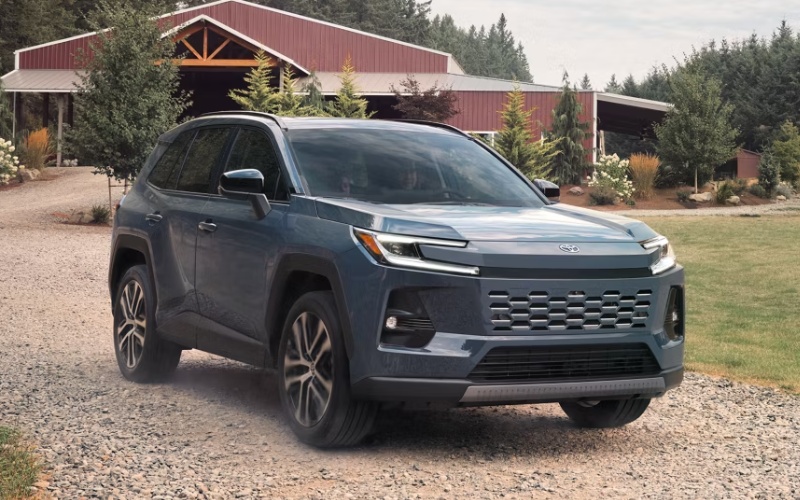
Toyota of Portland - Does the 2026 Toyota RAV4 offer a plug-in hybrid advantage over the 2026 Honda CR-V for drivers near Vancouver, WA?
The question comes up all the time: does one of these compact SUVs give drivers meaningful electric capability without changing daily habits? If you are comparing the RAV4 and CR-V near Vancouver, WA, the answer is yes—RAV4 stands apart with an available Plug-in Hybrid Electric Vehicle (PHEV) configuration. That distinction matters if you want to add electric-only miles for short errands or quiet early-morning departures while keeping the convenience of a gas engine for long trips. It is a seamless way to lean into electrification without rethinking how you drive or plan.
RAV4’s PHEV pairs a gas engine with a larger battery that you can charge at home or on the go, providing responsive torque at low speeds and confident passing power when you need it. The system works with available AWD for traction on wet days or when you head out toward the Gorge. The CR-V’s hybrid system is smooth and efficient as well, and it offers AWD on select trims. But there is no plug-in option, which is the key reason many shoppers favor RAV4 when looking to future-proof their garage while keeping everyday utility intact.
Why a plug-in hybrid can be the right middle ground
For many households, a PHEV is the sweet spot between a traditional hybrid and a full EV. You can plug in at home overnight to maximize electric driving for short local trips, then head out for a weekend road adventure without worrying about public charging availability. That built-in flexibility has made RAV4’s PHEV a popular choice among drivers who want to reduce fuel stops and enjoy a quieter, more responsive drive in town.
The rest of the RAV4 lineup supports that experience with thoughtful, time-saving tech. The available 12.9-in. Toyota Audio Multimedia touchscreen brings a smartphone-slick interface to navigation and media, while the standard 12.3-in. digital gauge cluster keeps key details in clear view. Available Advanced Park can take the edge off tight parallel spaces, and the available integrated Drive Recorder functions like a built-in dash cam. CR-V counters with a well-organized cabin, standard 9-inch touch-screen across trims, available Bose premium audio on Sport Touring Hybrid, and the confidence of Honda Sensing. For some drivers, that may be enough. For others who want PHEV capability plus an even larger screen and self-parking, RAV4 simply checks more boxes.
Charging and daily use near Vancouver, WA
Most PHEV owners rely primarily on home charging. A standard household outlet can work for overnight top-offs; an available Level 2 setup shortens that window substantially. Public Level 2 stations are increasingly common around shopping centers and workplaces near the I-5 corridor, which makes it easy to top up while you run errands or grab lunch. Because RAV4’s PHEV still carries a gas engine, you always have a fallback for longer drives—no planning anxiety required.
On the days when the weather turns or the route includes a steep climb, RAV4’s available AWD and strong low-end torque from the hybrid system keep things steady. CR-V’s available Real Time AWD adds reassurance as well, but without a plug-in variant, you lose out on those electric-only morning commutes that many owners grow to love.
Key differences shoppers ask about
- Electrified choices: RAV4 offers Hybrid and Plug-in Hybrid; CR-V offers Hybrid only.
- In-cabin tech: RAV4’s available 12.9-in. touchscreen and standard 12.3-in. digital cluster exceed CR-V’s 9-inch display.
- Parking help: RAV4’s available Advanced Park enables hands-free parking; CR-V does not offer self-parking.
- Built-in recording: RAV4’s available integrated Drive Recorder can capture footage; CR-V lacks an OEM-integrated solution.
- Towing confidence: RAV4 offers up to 3500 lbs on select configurations; CR-V is rated lower.
Each of these differences might be small on its own. Together, they add up to an ownership experience that feels more flexible, more confident, and more future-ready. That is why many shoppers who start out unsure end up gravitating toward RAV4 after a close look at their week-to-week needs.
Frequently Asked Questions:
Will a PHEV fit my routine if I do not always plug in?
Yes. A PHEV works like a hybrid when the battery is not charged, so you still enjoy efficient, responsive performance with the convenience of a gas engine for long drives.
Is the PHEV good for cool, wet weather?
Absolutely. RAV4’s available AWD and the instant torque characteristic of electrified powertrains help with confident launches and steady traction in slick conditions.
Do I need special equipment to charge at home?
Not necessarily. Many owners start with a standard outlet; a Level 2 solution is a popular upgrade for quicker charging and added convenience.
For shoppers comparing these two nameplates, the availability of a plug-in hybrid is often the tiebreaker. It reduces fuel stops, adds quiet electric miles around town, and does not change your long-trip freedom. Pair that with RAV4’s expansive screen setup, available hands-free parking, and robust towing, and it is easy to see why the balance tilts its way for many drivers.
Have more questions or want to explore which configuration fits best? Toyota of Portland is here to help, serving Happy Valley, Beaverton, and Vancouver with friendly, informed guidance and a relaxed test-drive experience focused on your needs.
Request more 2026 Toyota RAV4 information
Categories:
Toyota RAV4
