

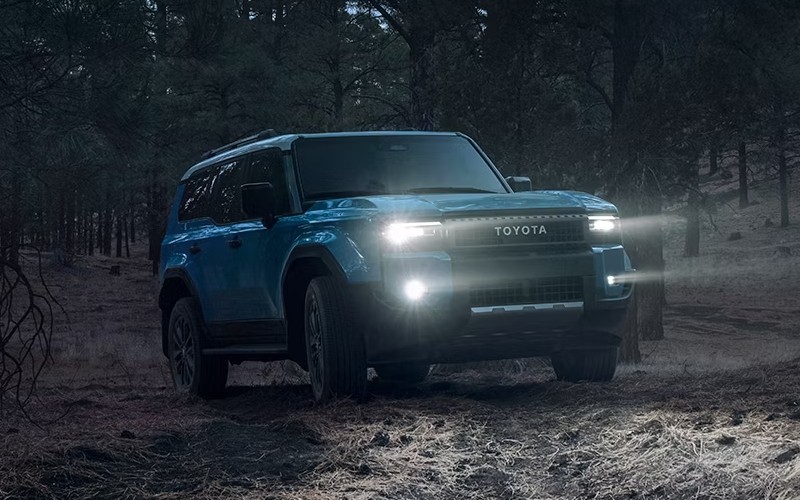
Toyota of Portland - Which SUV suits weekend trails around Vancouver, WA better — the 2026 Toyota Land Cruiser or the 2026 Ford Bronco?
Shoppers across the Portland metro often ask a familiar question: between the 2026 Toyota Land Cruiser and the 2026 Ford Bronco, which SUV fits weekend trails around Vancouver, WA better—without sacrificing daily comfort? Both are legitimate off-road machines with proven pedigrees. The difference comes from how they make capability feel—effortless versus hands-on—and how well that personality carries over to commuting, school runs, and long highway days.
The 2026 Toyota Land Cruiser leans into a polished, integrated approach. Its standard full-time 4WD keeps power flowing to both axles at all times, giving you built-in traction on rain-darkened streets, loose gravel, or wet leaves. An electronically controlled 2-speed transfer case and a center locking differential provide authentic mechanical bite when surfaces get mixed or marbly. Layer in Crawl Control for low-speed traction and available Multi-Terrain Select (MTS) for dial-a-surface grip, and Land Cruiser steadily builds confidence. The Ford Bronco counters with selectable 4x4 systems and G.O.A.T. Modes, plus available front and rear lockers and an electronic sway-bar disconnect on certain trims—seriously capable gear that rewards drivers who like to toggle settings as terrain changes. If you prefer an SUV that anticipates traction and simply gets on with it, Land Cruiser’s system feels more seamless on the wide mix of surfaces you’ll encounter between downtown and the Columbia River Gorge.
Powertrain character and towing confidence
Under the hood, Land Cruiser’s i-FORCE MAX Hybrid blends a turbocharged 4-cylinder with electrification for 326 net hp and 465 lb.-ft. of torque. That torque hits low, which helps you ease over ledges, merge briskly, and tow up to 6,000 pounds with calm assurance. On the Bronco side, you can choose from multiple gas engines, including a 2.3L EcoBoost I-4, a 2.7L EcoBoost V6, and a high-output 3.0L EcoBoost V6 on Bronco Raptor. It’s an enthusiast-friendly spread, and some trims even offer a 7-speed manual. But without a hybrid option, Bronco can’t quite match the Land Cruiser’s smooth, torque-rich delivery that makes day-to-day driving feel more settled—especially when you’re pulling gear for a coastal weekend or heading over the pass for mountain biking.
Trail tools you’ll actually use
Anyone who’s eased down a rutted track near Larch Mountain knows that good visibility and steady inputs reduce stress. Land Cruiser’s available Multi-Terrain Monitor (MTM) shows forward, side, and underbody views on-screen, turning blind crests and boulder fields into predictable lines. Bronco offers an available 360-degree camera system that’s also helpful, particularly in tight spots with brush on both sides. Land Cruiser’s Stabilizer Disconnect Mechanism (SDM) increases wheel articulation for better contact over offset obstacles, while Bronco’s electronic sway-bar disconnect does similar work. Both are useful, but Land Cruiser bundles its tools so they’re easy to reach and intuitive to learn from day one.
Interior comfort and everyday ease
For many Vancouver, WA families, the SUV’s cabin is where the decision is ultimately made. Land Cruiser focuses on thoughtful comfort—available heated front seats and steering wheel, crisp infotainment, an available Head-Up Display, and carefully placed controls that minimize distraction. It’s quiet and composed on I-5 and SR-14, and the upright glass delivers natural sightlines in traffic and on trails. Bronco’s interior, especially with available marine-grade vinyl and rubberized floors, is perfect for muddy gear days and top-off adventures. That’s a real advantage for open-air fans. Still, if your schedule blends Monday-through-Friday commuting with weekend exploring, Land Cruiser’s refinement pays dividends every mile.
Safety and driver assistance
Toyota Safety Sense™ 3.0 comes standard on Land Cruiser, bringing a comprehensive suite of active safety features to every driver, every day. Pre-Collision System with Pedestrian Detection, Lane Departure Alert with Steering Assist, and Dynamic Radar Cruise Control help reduce the fatigue of cross-town drives and weekend road trips alike. Ford Bronco’s Ford Co-Pilot360 offers solid protection too, including Pre-Collision Assist with Automatic Emergency Braking and available BLIS with Cross-Traffic Alert. The difference is consistency—Land Cruiser standardizes a robust set of features so you don’t have to shop trims to get the protection you expect.
Key takeaways for local drivers
- All-surface traction: Land Cruiser’s standard full-time 4WD and center locking differential feel planted on wet city streets and unpaved shortcuts alike.
- Torque where it counts: The i-FORCE MAX Hybrid’s 465 lb.-ft. helps with towing, merging, and crawling, while staying smooth and predictable.
- Simplicity in tough spots: Crawl Control, available MTS, and MTM make it easier to focus on your line rather than fiddling with settings.
From a purely capability-first standpoint, both SUVs will get you into the woods and back with a smile. The deciding factor for many Vancouver, WA shoppers is how the SUV behaves the other 80 percent of the time—navigating rain grooves, busy ramps, and imperfect pavement. That’s where Land Cruiser’s composure, hybrid torque, and standard safety tech consistently tilt the scales.
Frequently Asked Questions:
Do I need front and rear lockers for Pacific Northwest trails?
It depends on where you go. Many local trails can be handled with a capable 4WD system, good tires, and a rear locking differential. Land Cruiser’s standard full-time 4WD and center locking differential deliver excellent mixed-traction control; Bronco’s available front and rear lockers help on more extreme routes.
Which is better for towing small boats or campers?
Land Cruiser is rated up to 6,000 pounds, offering a helpful margin for gear and passengers. Bronco’s maximum rating is 4,500 pounds. If your trailer weight varies or you haul over mountain passes, Land Cruiser’s extra torque and tow rating provide added confidence.
How important is a full-time 4WD system for daily driving?
On wet, variable surfaces common around the metro, full-time 4WD can feel more settled because it constantly distributes torque to both axles. Land Cruiser provides that as standard, which is confidence-inspiring in changing conditions.
What about open-air driving?
If you love doors-off and roof-off adventures, Bronco is the clear winner. Land Cruiser focuses on quietness, durability, and integrated capability rather than removable body panels.
When you’re ready to test both vehicles back-to-back, Toyota of Portland can help you dig into the details that fit your routines and destinations. Our location is serving Happy Valley, Beaverton, and Vancouver with knowledgeable product specialists who know the local roads and the local trails—and can help you choose the right setup for your kind of adventure.
Request more 2026 Toyota Land Cruiser information
Categories:
Toyota Land Cruiser
